
106. Can Stones Preserve Knowledge?

Updated: Aug 27
“Few archaeological hypotheses have been able to become certainties; too numerous, on the other hand, those which, passing into the state of dogmas, constitute serious obstacles to progress.”
Alfred François Devoir (1865–1926)
What Do We Mean by “Prehistory”?

Prehistory is usually defined as the period before written records. It’s a nice, simple definition, but it creates a barrier. It tends to suggest that before writing, or evidence of writing, little of intellectual or scientific importance could have existed; that thought, calculation, astronomy, geometry, and long-range planning belong properly to history. Somehow, prehistory has become a vague, largely mute prologue to when all the excitement began. Yet this assumption collapses the moment we confront the material record. Many monuments are positioned squarely in this pre-history phase of human activity. They required planning, coordination, surveying, geometry, and long-term intent. As they are not accompanied by explanatory texts, they sit uneasily within conventional historical narratives. Or at least, there is unease when the implications of all this effort are considered, in contrast to the generally accepted version of events. The problem of prehistory, then, is not simply the absence of evidence of writing. It is the absence of accepted interpretative frameworks capable of accounting for complexity without texts. What do we do when the stones speak, but we have trained ourselves not to listen?
When Stones Outpace Stories

The absence of a contemporary narrative to accompany prehistoric monuments is, of course, a loss. We are accustomed to understanding the past through words: chronicles, inscriptions, laws, poems, treatises. When texts are present, interpretation feels anchored. When they are absent, we feel unmoored. So it's understandable that disciplines trained to privilege writing should hesitate when confronted with mute stone. But before we lament what has not survived, it is worth pausing to consider what has.
Across much of the world, from the Atlantic coasts of Europe to the Nile Valley, from the Levant to the Indus, and across the Americas, monumental structures survive that predate the earliest known explanatory texts by centuries, sometimes millennia. Megalithic circles, passage tombs, causewayed enclosures, pyramids, and vast temple complexes dominate landscapes not only physically but conceptually. They required planning over long periods, the mobilisation and coordination of large numbers of people, the transport and placement of enormous stones, and an understanding of geometry, proportion, and orientation. Many required surveying across uneven terrain. Some display striking regularities of alignment with celestial events: solstices, equinoxes, lunar standstills. Others encode dimensions and proportions that recur across sites separated by great distances. These are not the traces of improvisation. To acknowledge this is not to claim that we can fully recover the intentions of their builders. We cannot. But we can take seriously what remains, even when it does not speak in the language we expect.
The dominant narratives of civilisation are usually told in terms of technologies, economies, political institutions, migrations, and power struggles. These are important stories, but they leave something curiously unaddressed: how people understood the universe itself, and their place within it. Prehistoric monuments suggest that for many ancient societies, this question was not abstract or peripheral. It was embedded into daily life, ritual practice, calendrical reckoning, and architecture.
Across cultures, creation myths tell strikingly similar stories: of a primordial undifferentiated mass; of the separation of heaven and earth; of order emerging from chaos; of number, measure, or word bringing structure into being. These motifs appear in the Rig Veda, in Mesopotamian cosmogonies, in Egyptian theology, in the Hebrew Bible, and in traditions far removed from the Near East. When we then encounter monuments whose dimensions and proportions appear to reflect astronomical cycles or geometric ratios, it becomes legitimate to ask whether these myths and these stones belong to the same intellectual world.
At Giza, and at other sites around the world, the precision and consistency of certain measures far exceed what would be required for structural stability alone. Something else appears to be at work. In attempting to make sense of this, I found myself gradually reversing the usual line of reasoning. Instead of beginning with what ancient people are supposed to have lacked, such as writing, formalised mathematics, modern instruments, I wondered what they had, that we don’t. I began by asking what kind of worldview would make such constructions meaningful. That path led, unexpectedly but persistently, toward an animistic conception of the cosmos: not in the trivial sense of superstition, but in the deeper sense that the universe itself was understood as alive, ordered, and internally coherent.
Within such a worldview, several assumptions follow naturally. First, that the cosmos is not inert matter but a living system. Second, that humans are not external observers of this system, but participants within it, influencing and influenced by its rhythms. Third, that maintaining balance, be it cosmological, social, moral, requires understanding the order that governs the whole. And finally, that mathematics and geometry are not abstract games, but tools for apprehending and honouring that order. Architecture, calendars, music, ritual, and social organisation would then become expressions of cosmic alignment rather than merely functional solutions.
The earliest surviving philosophical and mathematical texts, from Greece and India, to Egypt and Babylon, do not emerge from a vacuum. Pythagoras was not the first to encounter right-angled triangles. Euclid did not invent geometry ex nihilo. So-called Pythagorean triples such as 3:4:5 and 5:12:13 appear in Babylonian tablets, Indian texts, ancient Egyptian surveying practices, and in the geometry implicit in megalithic sites across Europe. Their widespread distribution suggests not isolated discovery, but shared techniques and transmitted knowledge.
There is no compelling reason to assume that mathematics, astronomy, or philosophy began suddenly with the Greeks. On the contrary, the evidence suggests that Greek thinkers inherited, systematised, and re-articulated ideas that were already ancient, much of it from Egypt. Textual traditions allow us to trace this inheritance in some cultures; in others, we must rely on material traces. Where writing is absent, geometry and measure may function as a different kind of archive.

This is why precise measurement matters. When monuments are measured carefully, patterns emerge that are difficult to dismiss as accidental. Proportions recur. Ratios repeat. Dimensions align with astronomical periods. In some cases, such as Stonehenge or Newgrange, these relationships are visibly enacted through light and shadow at particular times of year, suggesting practical calendrical or observational functions. In others, the astronomical information appears to be embedded in the scale and geometry of the site itself, without requiring ongoing observation to activate it. In these cases, the monument does not merely track cycles; it embodies them. Here, the analogy of an analogue computer is sometimes invoked, and not without reason. But even this may understate the case. Some monuments seem less concerned with calculation than with commemoration: the inscription of cosmic order into stone as a form of participation rather than utility. Architecture was not merely shelter or display, but a way of aligning human activity with the structure of reality. Numbers, in this context, were not neutral quantities. They carried cosmological significance. They linked human time to celestial time, local place to universal order.
When written words are absent, dimensions and proportions often remain. They lack the emotional immediacy of narrative, but they possess a different power. They can reveal habits of thought, priorities of attention, and conceptions of harmony. They appear in Plato and the Rig Veda, in biblical chronologies and Egyptian ritual texts, and in the silent dimensions of stone monuments. They allow us to glimpse a worldview in which the universe was intelligible, structured, and responsive to measure.

Most modern buildings probably wouldn't reward this kind of analysis. Their dimensions tend to be contingent, constrained by materials, budgets, and regulations rather than cosmological aspiration. The difference is not that ancient builders were naïve, but that they were operating within a different intellectual horizon, one in which number, geometry, and astronomy were woven into the fabric of life itself. To attend to those numbers is not to romanticise the past. It is to take seriously the possibility that prehistoric monuments were not merely functional structures, nor crude precursors of later achievements, but deliberate expressions of a worldview in which cosmic order mattered. Listening to stones in this way does not give us certainty. But it allows us, at least, to hear questions that are otherwise lost to silence.
In any scholarly field, hypotheses begin as provisional tools. They are offered tentatively, tested against evidence, revised, and sometimes discarded. Over time, however, certain explanations settle into place. They become familiar. They become convenient. Eventually, they become invisible. What began as a working assumption hardens into a boundary of acceptable thought. Archaeology and ancient history are no exception. Because these disciplines deal with fragmentary evidence, they rely heavily on inference, analogy, and interpretation. This is unavoidable. Yet precisely because of this, the need for interpretative caution can gradually transform into interpretative prohibition. Instead of asking whether a particular line of inquiry is supported by evidence, the field begins to ask whether it ought to be entertained at all.
Recently, the archaeologist Stefan Maeder has drawn attention to this phenomenon in the context of megalithic studies. He describes what amounts to an interpretative prohibition: a resistance, sometimes explicit but more often implicit, to approaches that consider astronomical observation as a factor in the placement, construction, or symbolic organisation of Neolithic monuments. What is striking is that this resistance is not always grounded in counter-evidence. Rather, it reflects an inherited assumption about what prehistoric people are presumed to have been capable of knowing. The result is a paradox: archaeology is a discipline devoted to interpreting material remains, yet entire categories of interpretation, be they astronomical, mathematical, or geometrical, are often rejected a priori when applied to prehistoric contexts. Certain questions create unease because they threaten established timelines. When did sophisticated astronomy begin? When did humans first measure celestial cycles with precision? When did geometry become architectural rather than merely practical? When did large-scale systems of measure emerge? Was long-distance cultural exchange possible before the earliest known examples of written history? These questions destabilise the neat progression from ignorance to knowledge on which many modern narratives depend.
We should be able to ask these questions for ourselves. Why should the suggestion that astronomy, surveying, or mathematical planning may be far older than generally assumed provoke ridicule rather than debate? Why are such proposals so often dismissed with labels rather than examined through evidence?

Modern historical narratives are shaped, perhaps unconsciously, by a belief in slow, steady, uninterrupted progress: ignorance yielding to knowledge, superstition to science, simplicity to complexity. This story flatters the present. It reassures us that we stand at the summit of history. Yet it also creates a profound asymmetry. We imagine our future technologies with extraordinary sophistication, while imagining past societies with striking intellectual poverty. The more advanced we believe ourselves to be, the less capable our ancestors are allowed to appear.
Within this posture, certain terms perform a powerful function. Among them, “pseudo-science” and “pseudo-history” occupy a special place. These labels are rarely accompanied by detailed methodological critique. Instead, they act as rhetorical closures. They signal that a line of inquiry need not be examined further. The irony is that much of archaeology and ancient history is not “science” in the strict experimental sense at all. It is interpretative, inferential, and probabilistic. It depends on judgement, comparison, and coherence across multiple lines of evidence. To invoke “science” as a boundary marker while dismissing uncomfortable interpretations without argument is to confuse authority with method. Labeling research as “pseudo” probably reveals more about the anxiety of the critic than the weakness of the work being described. It functions less as evaluation than as apotropaic language: a verbal charm designed to ward off epistemic danger.
Psychology offers a useful lens here. Leon Festinger’s theory of cognitive dissonance describes the discomfort experienced when new information conflicts with deeply held beliefs. One common response is not to revise the belief, but to discredit the source. In this light, the ridicule directed at unconventional interpretations of the ancient past is understandable, even predictable. Challenging timelines is not merely an academic act. It destabilises identity, authority, and professional inheritance. Discomfort, however, is not a criterion of falsity.
Michel Foucault reminded us that truth is produced within regimes of power. What can be said, who may say it, and how it may be framed are historically conditioned. Archaeology, like any discipline, has its own regime of truth. It is therefore legitimate, indeed necessary, to study not only ancient monuments, but the intellectual structures that govern how those monuments are interpreted. An archaeology of archaeology reveals patterns of exclusion, deference, and boundary-maintenance that shape our understanding of the past as much as the stones themselves.
When dealing with monuments that predate written records by centuries, certain kinds of proof are impossible. Architects’ plans will not be recovered. Units of measure employed cannot be confirmed beyond doubt. What remains are measurements, proportions, orientations, and patterns in stone. To observe π in a monument is not to claim that its builders understood it as a transcendental number in the modern sense. It is simply to observe a geometric relationship. To recognise astronomical cycles encoded in architecture is not to claim conscious symbolism in every instance, but to note structured correspondence. However, we need to be open to the possibility that something of the unknowability of the value of pi was indeed known in the ancient world.
In this domain, explanation must remain probabilistic, comparative, and restrained. Peer consensus is not truth; nor is dissent error. Different models compete, but they also complement one another. The task is not to eliminate uncertainty, but to ask which models offer the most coherent, economical, and generative account of the evidence. As the philosopher Peter Strawson observed, we accept theories not because they are immune to doubt, but because they supply the best available explanations.
1.4 Forbidden Questions

In May 2024 I went to a conference in France, organised by Quentin Leplat, the brilliant independent researcher on ancient Egypt, metrology and megaliths. One of the speakers presented his work on something called forbidden archaeology. I had come across this term on YouTube already, in relation to Michael Cremo. But here the term was used more broadly, to designate research into the ancient world that was frowned upon by mainstream academia. The speaker was a Belgian psychiatrist and amateur egyptologist, Dr Jean-Pascal Rouby, and he presented an account of the reasons that are given to discredit research that operates outside the bounds of formal academia, and the reasons why people might be fearful or disrespectful of this type of work. I thought about this a lot on my journey home. I have come across a few independent researchers in online exchanges who are hugely disappointed with the lack of public or academic in their work, despite their research being compelling, and often extensive, and quite enlightening. In this age of the internet, it’s unreasonable to suppose that non-academics won’t find good answers to historical (or pre-historical) questions, or for that matter, ask good questions, that may not yet have been asked. One of the other speakers at the conference was Stefan Maeder, who spoke about astronomy in relation to megaliths, and spoke of a culture of "elitism and interpretative sovereignty within present-day megalithic studies". He noted:
One of the current prohibitions of thinking in archaeology on the Neolithic in Brittany consists of ignoring, if not prophylactically rejecting, any approach which would take into account indicators for targeted observations of the sky as factors for the placement, construction and "decoration" of places of worship and funeral facilities.
Impressed by all the speakers at this conference, and inspired by Jean-Pascal’s talk in particular, I decided to start a YouTube channel to celebrate and promote independent research. It also got me thinking about the kinds of questions that are, and aren’t allowed when it comes to understanding prehistoric artefacts. Thinking about ancient astronomy, in relation to the Neolithic, seems to be unpopular in academic circles.
Certain questions about ancient science might appear naïve, or provoke unease, hesitation, even ridicule. For example: when did humans first begin to observe the sky systematically? Do we have to limit ourselves to the past five millennia or so? When were the cycles of the Sun and the Moon first measured with precision? And when did geometry become architectural, symbolic, and cosmological? When did humans first attempt to measure the Earth itself? When did units of measure begin to function as carriers of meaning, rather than as simple tools? Was long-distance cultural exchange possible long before the appearance of writing? These questions are not easy to answer.
We tend to see ourselves today as the most technologically advanced people that have ever been, and despite the many problems and hardship that this has caused over the last two centuries or so, both to people and to the living world more generally, we tend to congratulate ourselves for it. Yet, this technological achievement is not necessarily matched in intelligence or perspicacity in the way we think about our collective past. In fact, the sophistication with which we shape and imagine our future technologies stands in stark contrast with the way in which we shape and imagine our past technologies, which is often simplistic, false, or illogical. Is it possible, in today's academic and cultural climate, to envisage a time long before our own, in which a civilisation once flourished on earth, across large sections of the planet, which was sophisticated in terms of technology and science?
The general view is that there have been certain scientific and technological milestones in human development, such as the IT and AI revolution now, the beginning of the space age in the 1960s, the industrial revolution in the 19th century, the scientific revolution of the 17th and 18th centuries, the Copernican revolution in the 14th century, the Islamic golden age between the 8th and 14th centuries, and before that the ancient Romans, Greeks, Sumerians, Akkadians, Babylonians, and Assyrians, Egyptians and Chinese, up to about 3 000 B.C. Before that, it is generally assumed that there was basically no science, no astronomy, and no architecture of note, and only the most basic mathematics, used for counting livestock, or days. This is despite evidence of sophistication to be found in megalithic remains, pyramids, and other ancient sites, if one is open to reading it. It is also assumed that there was no exchange between ancient cultures who were not already within the same geographical region, so that it is a coincidence if we find the same myth leitmotifs, elements of religions and worship, aspects of society such as the divinity of kings, the presence of pyramids, megaliths, systems of counting, systems of astronomy and time-keeping, and units of measure all over the world.
Sir Kenneth Clark once echoed John Ruskin’s suggestion that if we wish to understand a civilisation, we should trust its art. “Great nations write their autobiographies in three manuscripts,” Ruskin wrote, “the book of their deeds, the book of their words, and the book of their art. Not one of these books can be understood unless we read the two others. But of the three, the only trustworthy one is the last.” As prehistory leaves us no texts at all, we’re left with the art anyway, which is not so bad. This book proceeds from a simple premise: that these artefacts are not mute. To listen to them requires humility, scepticism, and imagination in equal measure. It requires us to suspend the certainty of received narratives without abandoning rigour. It requires, above all, the courage to admit what we do not know. As Plato reminds us, wisdom begins there.
The resistance to certain lines of inquiry in prehistoric studies is rarely framed explicitly as prohibition. More often, it appears as a tone: a raised eyebrow, a sigh, a warning about “speculation”, an appeal to “common sense”. Yet these gestures carry epistemic force. They mark the edges of acceptable thought. Astronomy is tolerated when it is obvious and limited; geometry when it is crude and practical; number when it can be dismissed as coincidence. Beyond that, the inquiry is expected to stop.
Could ancient architecture have encoded knowledge not primarily through words, but through measure, proportion, orientation, and number? Could units of length have functioned simultaneously as units of time? Could geometry have served as a bridge between terrestrial construction and celestial cycles? Were certain monuments designed less as static symbols than as active interfaces between human life and the rhythms of the cosmos?
Survivals, Not Beginnings
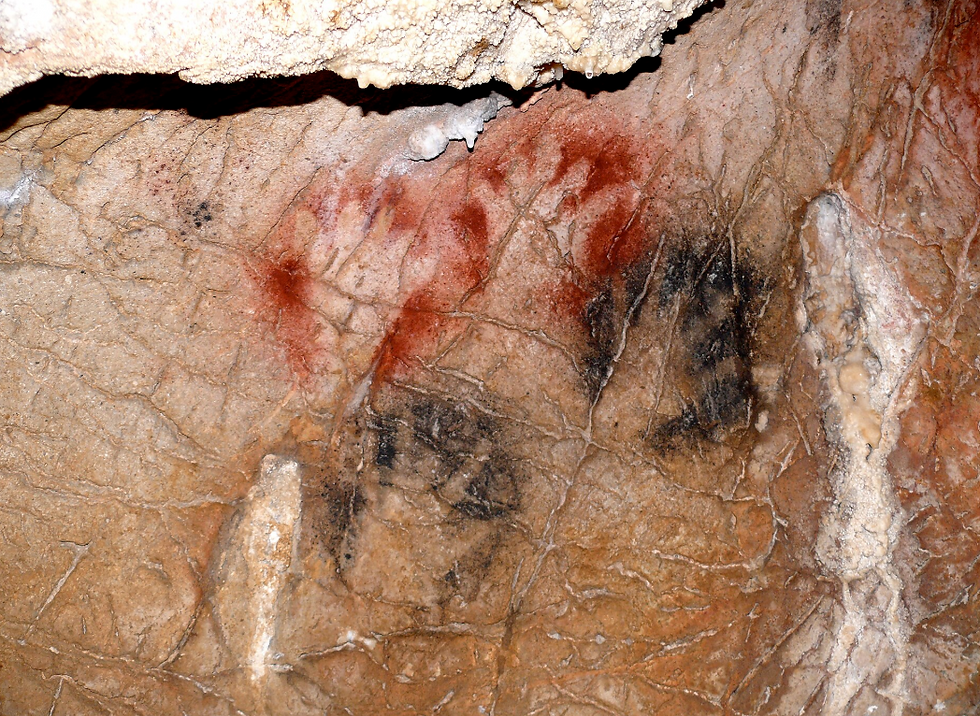
As Hilary Mantel observed, the past possesses a vital force still. It does not lie inert behind us, sealed off by time, but presses forward into the present through habits, symbols, institutions, and ideas. Nowhere is this more evident than in humanity’s enduring relationship with the cosmos. Across ancient Egypt, Greece, India, China, and the cultures of Mesopotamia, we encounter a shared intuition: that the universe is not dead matter, but a living order, and that human life is embedded within it rather than standing apart.
Many of the world’s great religions and philosophical systems emerged either from this worldview or in response to it. Some sought to reform it; others to replace it. Monotheistic traditions, rationalist ethics, and later mechanistic science often redefined humanity’s place in the cosmos, emphasising transcendence, individual responsibility, or empirical detachment. Yet these developments are best understood not as spontaneous innovations, but as transformations of something older. They are replies to an inherited cosmology whose traces never entirely disappeared.
Elements of this ancient orientation persist in unexpected ways. Yoga, widely practised today across secular and religious contexts alike, retains an explicit concern with the unity of body, mind, and cosmos. Contemporary longings for balance between individual and community, humanity and nature, inner life and external order, echo themes that once structured entire civilisations. What has changed most radically in recent centuries is not human curiosity, but the framework through which the world is interpreted. Cosmic harmony, once treated as a metaphysical reality governing agriculture, architecture, ritual, and morality, has gradually been displaced by a worldview that privileges mechanism, observation, and control.
Against this backdrop, it is striking that a number of serious thinkers, across disciplines and centuries, have arrived independently at a similar conclusion: that ancient science, astronomy, and cosmology did not begin where our histories say they did. Rather, what we encounter in early historical records are part of a much older tradition. John Michell described ancient traditions and monuments as “relics of a former elemental science”: fragments of a coherent system whose foundations had already been lost by the time history begins to speak. This was the outcome of decades of comparative study across mythology, architecture, geometry, and measure. The following words were written by John Michell in 1973 :
A scientific convention that excludes an entire area of experienced reality will naturally produce a somewhat distorted view of the world. This is everywhere apparent in the present situation, nowhere more so that in the current interpretation of history. the importance of history is not merely academic, for the events of our won time are to a great extent conditioned by the way in which we view the past. The technological developments of the last two centuries have generally been accepted as confirmation of a simplistic theory of evolution, according to which past ignorance is being replaced by modern knowledge. The objection which has been raised by many distinguished scholars that the historical and archaeological evidence, far from supporting this theory, actively contradicts it receives little attention for the belief in progress is essential to the vested interests, political, academic and commercial, of the age. The dominant institutions of the present find their justification in the assumption that they are the logical extensions of history, representative of a unique stage in human evolution, and that there is no alternative to the natural acceptance of their authority. This assumption is maintained by attributing to ancient societies the same ambitions as rule our own, and by denying the possibility of a universal civilisation in any age, but the present. Yet in 1927 in his book Kingship, Professor A.M. Hocart pointed to the existence in every continent of traditions and survivals relating to a primeval order of life, from which every subsequent development has been in the direction of decline and dissolution. Since his time, it has become evident that not only do the myths and the sacred histories of every race conform to identical cosmological patterns, but that prehistoric monuments all over the world were designed in accordance with one scheme of proportion in units of measurement which are everywhere the same.
Again, the traditions relating to these monuments are unanimous in claiming that the are relics of a former elemental science, founded on principles of which we are now ignorant. In an age which depends for its stability on force, expediences and moral exhortation, it is not without interest to review the ancient approach to the problems of existence in order to discover where it may illuminate certain features of the present time which are not easily accounted for.
Michell’s argument echoed that of the anthropologist A. M. Hocart, who, in Kingship (1927), documented the existence of remarkably consistent traditions across continents, traditions that pointed not toward gradual development, but toward decline from a prior order. Hocart did not claim certainty about this primeval system, but he insisted that the evidence for inheritance could not be dismissed without explanation.
More than a century earlier, the French astronomer Jean-Sylvain Bailly, a respected member of the Académie Royale des Sciences, had reached a similar conclusion through a very different route. Studying the astronomy of India, China, and Chaldea, Bailly was struck by a paradox: the presence of highly accurate methods, cycles, and numerical periods, combined with an apparent absence of theoretical understanding among the cultures that preserved them. What he found, he wrote, were not the elements of a science, but its débris: results without principles, practices without explanations, methods retained long after comprehension had faded. Bailly concluded that such knowledge could not have arisen quickly or locally. It must have been inherited from an earlier people whose civilisation had been disrupted or destroyed.
The originators of aftronomic knowledge, among different peoples, therefore have common ancestors who appear to be the true authors of this knowledge. If around 3000 years before our era we find vestiges of Afronomy everywhere, this is the time when its reign began again. We have the strongest reasons to believe that it was cultivated a long time ago, forgotten and lost to the earth.
When we carefully examine the state of Afronomy in Chaldea, India and China, we find there rather THE DEBRIS THAN THE ELEMENTS of a SCIENCE; they make very exact methods for the calculation of eclipses which are only blind practices, without any idea of the principles of these methods, nor of the causes of the phenomena; certain elements are very well known, while others are very effective, simple, or unknown, or strictly determined; a host of observations which reflect, for years, fans and fans of results. How can we conceive that people, inventors of Afronomy, could not have perfected it over the course of a long existence? If there are peoples so incapable of walking as of entering the career of sciences, will he who has entered it once by the movement which he has impressed upon himself, lose this movement, and can it stop forever?
The invention and progress of sciences are of the same nature. These progress only result in renewed invention, a flight of similar views, and perhaps of almost equal efforts. Why then did the Indians, but especially the Chinese and the Chaldeans, make Afronomy take very few steps, for a large number of years? The fact is that these peoples were extremely brilliant, they had the same indolence for discoveries as for conquests, they did not invent science. It is the work of an earlier people, who have cast doubt on progress of this kind, the greater part of which we are ignorant of. This people was destroyed by a great revolution. Some of his discoveries, his methods, the periods that he had invented, are preserved in the memory of the individuals affected. But they are limited by vague and confusing notions, by a knowledge of things, rather than principles. These remains of a dismembered science were brought to China, to India, to Chaldea; they were handed over to ignorance which was unable to take advantage of them. It was said that it was necessary to observe the others, and the Chinese and the Chaldeans observed them for thousands of years! Their confidence, their loyalty was encouraged by the aftrology which was communicated to them at the same time, and which is much more suited to ignorance. But they practiced methods they did not understand. They followed the observations almost without looking into the use that could be made of them.
(The capital letters are Bailly's own emphasis.)
In the twentieth century, John Anthony West arrived at an analogous position through his study of Egypt, informed by the work of Schwaller de Lubicz. West noted that Egyptian civilisation appears, from the very start of its historical record, fully formed. Writing, mathematics, architecture, mythology, medicine, and systems of measure all appear together, without a visible developmental phase commensurate with their sophistication. This fact is widely acknowledged by Egyptologists, yet its implications are often understated. As West observed, if such a phenomenon occurred in modern technology, if a complex system appeared without prototypes, we would immediately infer inheritance.
Just as Michell had written about a relics of former civilisations, and Bailly about debris of science, characterising the Babylonians, Greeks, Chinese, Indians, Egyptians, etc, West believed that it made sense to think about ancient Egypt as a legacy, of some other civilisation, or civilisations. West wrote:
Egyptian science, medicine, mathematics and astronomy were all of an exponentially higher order of refinement and sophistication than modern scholars will acknowledge. The whole of Egyptian civilization was based upon a complete and precise understanding of universal laws. And this profound understanding manifested itself in a consistent, coherent and inter-related system that fused science, art and religion into a single organic Unity. In other words, it was exactly the opposite of what we find in the world today.
Moreover, every aspect of Egyptian knowledge seems to have been complete at the very beginning. The sciences, artistic and architectural techniques and the hieroglyphic system show virtually no signs of a period of ‘development’; indeed, many of the achievements of the earliest dynasties were never surpassed, or even equalled later on. This astonishing fact is readily admitted by orthodox Egyptologists, but the magnitude of the mystery it poses is skillfully understated, while its many implications go unmentioned.
How does a complex civilization spring full-blown into being? Look at a 1905 automobile and compare it to a modern one. There is no mistaking the process of ‘development’. But in Egypt there are no parallels. Everything is there right at the start.
The answer to the mystery is of course obvious, but because it is repellent to the prevailing cast of modern thinking, it is seldom seriously considered. Egyptian civilisation was not a ‘development’, it was a legacy.
As far as I know, not many academics believe Bailly's, Michell's, or West's views on the ancient world to be correct, despite the research and expertise they are built on. While many researchers outside of academic ancient history and archaeology circles, and some within, do sympathise with these conclusions, they are mostly not considered views to be taken seriously. Why not? What are the reasons for the lack of discussion or debate on certain issues? Some of the more high-profile researchers who have contributed to debate on the ancient world have been the recipients of enormous amounts of negativity, and put under huge pressure professionally. Others have been simply insulted by establishment researchers, even when they are best-selling writers.
Robert Schoch, who as a geologist of great renown, famously put forward the possibility that the Sphinx in Egypt was older than had previously been thought (circa 2500 BC), on the basis of erosion, is one example. He dated the Sphinx to between 7 000 and 5 000 BC firstly, and then to 10 000 BC., and his work received a lot of criticism. Despite, as a geologist, being in a position to analyse rock in a way that egyptologists simply couldn't, his work was sometimes ridiculed, even dismissed as non-scientific. Robert Schoch is according to Wikipedia "an American associate professor of Natural Sciences at the College of General Studies, Boston University. Following initial work as a vertebrate paleontologist, Schoch co-authored and expanded the fringe Sphinx water erosion hypothesis since 1990, and is the author of several pseudohistorical and pseudoscientific books". Wikipedia also adds: "The Sphinx water erosion hypothesis is a fringe claim." For some reason, the consensus is so greatly against Schoch's work, in the mainstream, that even the writers of his Wikipedia entry have chosen to demean him with these "pseudo-" prefixes.
Another example can be found in Thor Heyerdahl's theories and expeditions, such as his famous 1947 Kon-Tiki expedition, where he sailed from Peru to Polynesia on a raft, and his later expeditions with reed boats, like the Ra and Ra II, were groundbreaking and garnered significant public attention. Thor Heyerdahl demonstrated that reed boats, of the sort associated with ancient Egypt, were capable of crossing the ocean to the Americas. Despite this, his ideas remain mostly ignored.
There are best-selling non-fiction non-academic writers who are so regularly tarnished with the "pseudo-scientist" brush even their Wikipedia profile re-iterates it, rather than respectfully steering clear from petty insults. According to Wikipedia, Graham Hancock is a "is a British writer who promotes pseudo-scientific theories". Gavin Menzies, according to Wikipedia also, "was a British submarine lieutenant-commander who authored books claiming that the Chinese sailed to America before Columbus. Historians have rejected Menzies' theories and assertions and have categorised his work as pseudohistory." Still according to Wikipedia, Christopher Knight is "an author who has written several books dealing with pseudoscientific conspiracy theories".
A similar line of enquiry has been pursued, from different perspectives and with varying degrees of methodological rigour, by a number of researchers working on ancient metrology, astronomy, and monument alignments. From the astronomical speculations of figures such as Alexander Thom, whose surveys of megalithic sites suggested a consistent system of measurement and astronomical awareness, to the contributions of Gerald S. Hawkins and Fred Hoyle, who explored the possibility of eclipse prediction in prehistoric monuments, the question of inherited or encoded knowledge has repeatedly surfaced. More recent work by researchers such as John Neal, Robert Bauval, and Graham Hancock has continued to develop these themes, often drawing attention to large-scale patterns and correspondences that remain difficult to explain within conventional developmental models. Alongside these published works, a growing body of independent research, shared through books, articles, and digital platforms, reflects a broader and ongoing attempt to grapple with the same underlying problem: how complex systems of number, measure, and astronomical relation appear so early, and with such coherence, in the archaeological record. While conclusions differ, the persistence of the question itself is notable.
What unites these writers and researchers is a shared refusal to confuse absence of evidence with evidence of absence. None of these thinkers argued that ancient knowledge was mystical or supernatural. On the contrary, they emphasised observation, measurement, long-term data collection, and coherent symbolic systems. Their dissent lies not in their rejection of reason, but in their refusal to accept a progressive narrative that cannot account for the evidence it encounters. These figures are often marginalised in contemporary discourse, because they challenge a deeply embedded assumption: that science, mathematics, and sophisticated astronomy are relatively recent achievements. To admit the possibility of earlier high-level knowledge destabilises the comforting story of uninterrupted progress. This book does not ask the reader to accept these thinkers’ conclusions wholesale. It asks only that they be taken seriously. The concept of discontinuous transmission, of knowledge and science persisting in fragmentary, symbolic, or encoded form, provides a powerful lens through which to examine ancient monuments, measures, and numbers. What appears in the historical record is often not a complete system, but its residues: practices without explicit justification, proportions without stated principles, results preserved after their originating framework has been lost. In this sense, knowledge does not simply survive; it is interrupted, transformed, and at times reconstituted. It allows us to ask not where an idea began, but what it might once have belonged to.
Flatten to Deceive

Every age tells a story about itself, so familiar it becomes invisible. We today are, supposedly, after a long ascent from ignorance to knowledge, superstition to science, brutality to enlightenment, scarcity to abundance, the most wonderful people ever to have lived. The more we believe in progress, the more we require our ancestors to be simple. This is the first mechanism by which the past gets flattened. Complexity is allowed only where it has paperwork. Where there are texts, there can be philosophy. Where there are archives, there can be administration. Where there is recorded theory, there can be science. But where there are stones, our interpretative imagination often contracts. We retreat to the safe categories: “ritual,” “symbolic,” “primitive religion,” “trial and error,” “accidental alignment.” The monument is permitted to be impressive, but its creators are not permitted to be intelligent.
This flattening is rarely malicious. It is psychological. It arises from a subtle asymmetry in how we distribute sophistication across time. We imagine our future with extravagant generosity: technologies so advanced they border on magic, intelligences surpassing our own, possibilities we cannot yet name. But we imagine our deep past with unusual stinginess. We grant our ancestors hands, but withhold minds. We grant labour, but hesitate to grant design. We grant survival, but resist granting a coherent worldview. The paradox is that the evidence often points in the opposite direction: the further back we go, the more we encounter architecture that seems to require long-range planning, precision, geometric thinking, and careful observation of the sky.
When claims about the deep past violate this implied hierarchy, the response is often not careful refutation but the application of a label. Among the most potent is “pseudo-history.” It is worth pausing over the oddness of the term. A history is a narrative woven from events, traces, and interpretation. What, exactly, would a “pseudo” history be? A counterfeit narrative that merely imitates the form of explanation without any connection to evidence. That is a legitimate category in principle. There are fictions posing as fact; forgeries; ideological myths; stories designed to persuade rather than to understand. But in practice, “pseudo-history” is often used more broadly, as a way of shutting down not falsehood but discomfort: the discomfort of questions that press against accepted timelines or approved ideas of human capacity.
In this sense, the label begins to resemble one of those postmodern paradoxes that reveals something about the culture using it. Žižek once described the game of tennis without a ball that ends the film Blow Up as quintessentially postmodern: the gestures remain, the technique, the effort, the seriousness, but the defining object has vanished, leaving only performance. “Pseudo-history,” at its most cynical, can work like this. It preserves the outward motion of critique, the righteous dismissal, the defensive tone, the implicit appeal to standards, while bypassing the labour that standards actually demand: engagement with the claim, attention to data, a demonstration of error.
A strange cultural artefact captures this flattening of time with uncomfortable purity: Andy Warhol’s film Empire, an eight-hour, largely static shot of the Empire State Building. Almost nothing happens. Time passes, but meaning is withheld. The film can feel like a parable of how the deep past is sometimes treated in modern imagination: a long, blank stretch before the “real story” begins, before writing, before states, before “civilisation.” In fact, the emptiness of the movie echoes the generally accepted idea of what went on in the human world prior to 3 000 BC: not very much.
Here we meet a second mechanism: pride. Pride is not only personal; it can be civilisational. Modernity is built on extraordinary achievements, and those achievements can become an identity. If we believe we are the first truly scientific people, the first truly rational people, the first to measure accurately, the first to connect number to nature in a disciplined way, then evidence of ancient sophistication becomes more than an academic puzzle. It becomes a threat to self-image. It asks us to share the summit. It asks us to accept that some forms of intelligence may not be ours alone, and that “development” may not always be visible as a neat staircase.
John Michell opened City of Revelation with a polemical diagnosis of this educational and institutional posture, arguing that a culture trained in received orthodoxy becomes less able to interpret the past, and therefore less able to interpret itself. Whatever one thinks of Michell’s broader conclusions, his underlying point is difficult to deny: the formation of public belief does not happen in a vacuum. It is shaped by institutions, by incentives, by status, and by the ordinary human desire for coherence. The more tightly a narrative is tied to professional identity, the more costly it becomes to revise. This is not a conspiracy; it is a feature of social life.
None of this is to romanticise “wild ideas” or to excuse bad method. The fact that a claim is marginal does not make it true. But neither does marginality make a claim unworthy of examination. The philosopher Michael Williams puts the issue with helpful clarity: what matters, epistemologically, is not the origin of an idea but the quality of its justification. We may entertain daring hypotheses; we simply cannot keep them if they fail to find support.
That distinction is essential. To defend the legitimacy of asking difficult questions is not to abandon standards. It is to restore standards to their real purpose. If evidence can be tested, it should be tested. If measurements can be checked, they should be checked. If a model is incoherent, it should be shown to be incoherent. But dismissing an idea by calling it “pseudo” without doing the work of evaluation is not scientific caution. The deepest form of humility in this domain might at first pass for credulity. But perhaps it’s the willingness to admit two things at once: that the past is difficult to know, and that our certainty about it is often exaggerated. Plato, in the Charmides, frames wisdom as a kind of self-knowledge: the ability to discern what we know, what we do not know, and what we merely think we know. In the study of prehistory, this can be a method. The stones do not come with footnotes. This book therefore proceeds with a deliberately unfashionable posture. It assumes neither that our ancestors were saints nor that they were fools. It assumes that the human mind is older than our institutional narratives allow it to be, and that the material record may sometimes preserve, in measure and form, what texts do not preserve in words. If that is true, then the past has not been merely forgotten. It has been simplified. The task is not to replace one dogma with another, but to re-open the depth of time, and let the evidence, however strange, regain its full dimensionality.

Too often, interpretations of the deep past proceed by quietly imposing ceilings on ancient intelligence: assumptions about what people “could not have known,” “would not have measured,” or “did not yet conceptualise.” Such claims are impossible to ground in positive evidence. They are inherited expectations, reinforced by narratives of progress that place modernity at the apex of human understanding. This posture is methodologically fragile. It replaces investigation with presumption. A more balanced approach reverses the burden. Where patterns recur across geometry, astronomy, and measure, where numbers cohere across scale, where alignments repeat across sites, where proportional systems show internal consistency, intelligence should be the default assumption. To deny this a priori is prejudice disguised as restraint.
The Accusation of “Pseudo-Science” as a Boundary Spell
Discrediting certain kinds of ideas or research within the study of the ancient world is not simply a matter of academics protecting their discipline from error. Academia already possesses subtle and effective mechanisms for marginalisation: peer review, hiring practices, funding priorities, citation networks. It does not require blunt language to maintain boundaries. The widespread use of the prefix “pseudo-”, particularly associated with Wikipedia, therefore deserves closer attention, not as a technical term, but as a rhetorical act.
In principle, distinguishing between well-supported research and poorly supported speculation is both necessary and healthy. Not every claim deserves equal weight. Some ideas are incoherent; others are careless; some are demonstrably false. But in practice, the label pseudo-science or pseudo-history is often applied in advance of analysis, and frequently without explanation. It does not usually function as a conclusion reached after scrutiny. Rather, it operates as a verdict that forecloses scrutiny altogether. What is striking is how rarely the use of the prefix is accompanied by detailed methodological critique. One looks in vain, in many media discussions, podcasts, popular articles, or online encyclopaedias, for careful engagement with the actual arguments being dismissed. Instead, the label stands alone, doing all the work. Its effect is immediate and social rather than intellectual: it signals to the audience that a line of inquiry is not merely wrong, but unsafe; not merely mistaken, but unserious; not worth the risk of engagement. In this sense, “pseudo-” functions less as an epistemic judgement than as a form of apotropaic language. In ancient cultures, apotropaic symbols were used to ward off danger, misfortune, or malign influence. They did not refute the threat; they turned it away. The prefix pseudo- operates in much the same way. It is invoked to protect a conceptual boundary, to avert contamination by ambiguity, to keep unsettling possibilities at a safe distance. Once uttered, it reassures both speaker and audience: nothing further needs to be done.
This helps explain why the label is often deployed most aggressively in public-facing discourse rather than in specialist critique. Within academic journals, disagreements tend to be technical, cautious, and hedged. In the media, however, the performance of certainty matters. The use of pseudo- signals belonging: we know what counts as real knowledge; we are not naïve; we are on the right side of reason. The “we” invoked here is rarely examined. It is not a universal “we,” but a selective one, a collective identity that confers legitimacy through exclusion.
The irony is that the term pseudo-science is frequently applied to writers, journalists, or independent researchers, who do not claim to be scientists at all. To call such a person a “pseudo-scientist” is as conceptually confused as calling a bird a pseudo-dinosaur. The insult depends on a category error: it treats science not as a method but as a moral status, and deviation from it as a form of intellectual sin. At a deeper level, the power of the pseudo- label rests on an unexamined hierarchy of knowledge. Science, capitalised and idealised, is presented as the only legitimate mode of inquiry, while other ways of knowing, such as historical reconstruction, philosophical interpretation, symbolic analysis, or comparative mythology, are tolerated only insofar as they do not trespass into forbidden explanatory territory. The humanities, increasingly pressured to model themselves on the sciences, sometimes internalise this hierarchy, turning the language of science into a weapon against alternative forms of thought.
This is not to deny the extraordinary contributions of scientific disciplines to the study of the past. Archaeology today depends on genetics, radiocarbon dating, climatology, remote sensing, and materials science. These tools have transformed our understanding of ancient societies. But the authority of science does not license the dismissal of questions that cannot be resolved by scientific means alone. Some problems, especially those involving meaning, intention, symbolism, and worldview, require interpretation rather than measurement. To treat interpretative inquiry as inherently suspect is to misunderstand the nature of historical knowledge itself.
A useful parallel appears in John Berger’s critique of art criticism in Ways of Seeing. Berger observed how critics sometimes cloak artworks in opaque language, not to clarify them, but to mystify them, to protect interpretive authority and distance the public from direct engagement. The effect is not illumination, but control. The same dynamic can operate in academic discourse. Jargon, dismissal, and ritualised contempt can function as a screen, preventing readers from approaching objects, be it paintings or prehistoric monuments, on their own terms.
The use of pseudo- thus becomes a substitute for argument. It signals that an idea is not merely incorrect, but unclean. It creates an epistemic “outside,” a shadow realm where troublesome questions are sent so they do not have to be answered. In extreme cases, the tone resembles a secularised version of religious denunciation. The faith is no longer theological, but scientistic. The ritual is no longer the auto-da-fé, but the public shaming of dissenting ideas. The logic, however, is familiar: orthodoxy must be protected; heresy must be named. Ironically, this strategy weakens rather than strengthens established paradigms. By confusing theory with truth, and consensus with certainty, it erodes confidence in the very institutions it seeks to defend. A framework that cannot tolerate questioning reveals its fragility. Genuine scientific and scholarly confidence expresses itself through engagement, not avoidance.
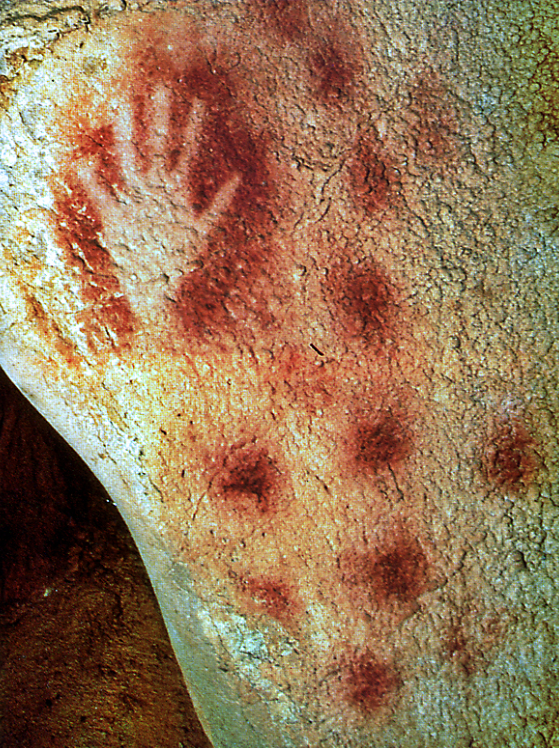
To call a piece of work “pseudo-science” or “pseudo-history” without argument is not an act of rigour. It is an admission of discomfort. It tells us less about the work being dismissed than about the anxieties of the dismissing voice. In the end, the prefix describes not the object, but the posture: a reflex to exclude rather than to examine, to protect rather than to understand.
The "pseudo" label is a means of enforcing orthodoxy and exercising power, and is used as a shortcut to avoid intellectual engagement with difficult or challenging ideas. There may be legitimate concerns about the methodology of any investigation, but the "pseudo" label serves as a protective mechanism for the status quo, ensuring that "established knowledge" remains unchallenged by newer or fringe perspectives, which are cast out. Perhaps it reveals an underlying anxiety about the instability of current scientific paradigms, which may not be as certain as people would like to believe. By dismissing something as "pseudo-science" or "pseudo-history," the accuser implies that their own position is backed by the authority of "true knowledge" (an oxymoron perhaps) and that the other position lacks this authority.
The "pseudo" label acts as a gate-keeping tool, determining who is allowed into the conversation about certain topics and who is excluded. It reinforces existing hierarchies of knowledge production, often privileging established academic or scientific institutions over independent or amateur researchers. Though grounded in empirical research and a degree of objectivity, knowledge is socially constructed and shaped by cultural, historical, and institutional factors. From this view, what is considered "real" science or history is itself a product of power structures and prevailing paradigms. Furthermore, not all valuable inquiry is falsifiable or fits neatly within empirical methods, for example, historical interpretations or certain philosophical investigations.
This raises an epistemological question: Can knowledge only be derived through falsifiable scientific methods? Or is there room for other kinds of knowledge that are still valid but don't fit these strict criteria, such as historical reconstructions, or speculative archaeology? Scientific methods may not be sufficient for understanding certain kinds of knowledge, especially in the humanities. By labelling alternative approaches "pseudo," the scientific establishment may be excluding other legitimate ways of knowing that don't conform to its methodologies but are still valuable. When does scepticism serve scientific progress, and when does it hinder it by preventing new ideas from being explored?
What Can Be Known Without Texts
Before I started my research into the ancient world, I was more of an arts and humanities sort of person. I love books, I love the written word. But in wanting to connect with these ancient monuments, I had to learn to love number too. I also had to try to understand astronomy, in the pre-modern sense. Exchanges on online platforms, notably the Graham Hancock message board, with researchers like Jim Alison, Stephen Dail, Jim Wakefield, Dennis Payne, David Kenworthy, Mat Apocalypse, and many others, helped me to learn about ancient science, and ways of thinking. I am thankful to them, and to Graham Hancock for providing the platform.
I found that analysing ancient measures, be they units, or dimensions of monuments, could reveal a whole lot about the ancients. What relationships do they establish? What cycles do they echo? What numbers recur, and at what scales? And, crucially, do these patterns cohere internally, geographically, and conceptually, or do they dissolve under scrutiny?
Metrology plays a central role in this approach. Systems of measure are often treated as secondary, as practical conveniences, bureaucratic tools, or local conventions. Yet measurement is one of the most fundamental ways in which human societies relate number to world. To measure is to decide what counts, what repeats, what can be carried across distance and time. Measurement is therefore never neutral. It embodies assumptions about scale, order, and significance.
When we examine ancient monuments through the lens of metrology, certain anomalies emerge. Units resembling the inch, the foot, the yard, or even the metre appear in contexts long predating their formal historical definitions. This does not require the anachronistic claim that prehistoric builders used “modern” units by name. It requires only the more modest observation that certain quanta of length recur, and that these quanta behave in mathematically and astronomically meaningful ways.

One of the most striking examples is the metre. Conventionally understood as an Enlightenment invention, defined as a fraction of the Earth’s polar circumference, it is assumed to be the product of modern surveying and instrumentation. Yet if ancient units, Egyptian, Persian, Greek, Roman, or other, align closely with metre-based values, or with fractions of the Earth’s circumference expressed in millimetres, then a question naturally arises. Either these alignments are coincidental across cultures and epochs, or some knowledge of the Earth’s dimensions existed long before its official modern measurement.
To entertain this possibility is not to abandon rigour. It is to follow the evidence where it leads. The same is true of proportion. Certain ratios, such as √2, √3, √5, π, φ, recur persistently in ancient architecture, art, and cosmology. These are not arbitrary numbers. They arise from geometry itself: from the diagonal of the square, the triangle, the pentagon, the circle. They belong to the structure of space. When they appear in monuments, at multiple scales, and in relation to astronomical cycles, they invite interpretation. Prehistoric people were not less intelligent than we are, and that if we look for sophistication, we may find it. Did geometry, astronomy, and measure once form a unified way of understanding the world? Can we find traces of that unity remain embedded in stone?
Compulsory attendence at the education mill, where received theories and notions of the time are presented to the innocent as established facts, encourages such totally false impressions of the past, that it becomes hardly possible to understand the present or to forsee the future. With every approach to knowledge guarded by a formidable array of experts and bibliographies, the aspirant must possess sharp wits and unnaturally developed scepticism if he is not to fall victim to one or other of the rival schools of dogma, secular and ecclesiastical, which, though mutually exclusive, units instinctively to frustrate any attempt to avoid altogether the established orthodoxies, defined by Einstein as "a collection of prejudices which are fed to us with a porridge spoon before our eighteenth year. Nowhere is the tyranny of the pedant more evident than in the study of human origins and sacred history. Most books about the remote past rely for their authority on nothing more substantial than the preconceptions of their authors, inevitably influenced by the misapplied theories of Marx, Freud and Darwin and the corrupt traditions of the Christian Church. We are thus conditioned at an early age to accept a narrow, linear view of history, according to which civilisation is a recent and unique development, now for the first time becoming universally established.
John Michell introduced his book City of Revelation with these words, first published in 1972. The invention of the internet of course changed the way we access information and enabled many people to read for themselves about many subjects, including antiquity. We can read these words of John Michell's and realise we are free to put into question any of the received notions we may have about the world, today, or as it was thousands of years ago.
A long tradition of astronomy
For an observer on Earth, the rising and setting of the Sun define the day. The shifting position of the setting sun on the horizon defines the year in relation to the solstices. The slow drift of the stars against the horizon define the year, and, for careful observers, the hours of the night as well. The phases of the Moon define the month. Over longer periods still, even the position of the equinoxes against the stars shift, revealing a deeper cycle that far exceeds any human lifetime.
It makes sense to think about time in cyclical terms, as ancient people across the world did. Days returned. Months repeated. Years revolved. Longer cycles unfolded slowly, almost imperceptibly, yet with absolute regularity. Time was not imagined as an arrow advancing into the unknown, but as a wheel whose spokes returned again and again to the same points. To understand time, therefore, was to understand cycles. And to understand cycles was to observe relationships: between the Sun and the Moon, between planets, between seasons, and between the visible sky and human life on Earth. What modern readers might underestimate is just how seriously ancient thinkers took this task, and how long their time horizons were.
Jean-Sylvain Bailly observed that the word year (annus) originally meant cycle or revolution, not a fixed duration of 365 days. In different contexts it could refer to a season, the interval between solstices, a lunar period, or a larger astronomical return. Historians who imposed a single definition retroactively, he argued, had manufactured contradictions that were never there. The same civilisation might count time in different “years” depending on what was being measured. What appeared as inconsistency was often precision operating at multiple scales. This flexibility reflected a world in which time could be read directly from the sky, and where different cycles overlapped without neatly collapsing into one another. The solar year did not divide evenly into lunar months. Planetary cycles drifted against both. The task of astronomy was therefore not merely to observe, but to reconcile: to find periods that brought cycles back into alignment.
This helps explain the extraordinary attention ancient cultures paid to long intervals. Bailly was struck by the fact that traditions from Egypt, Chaldea, India, and China all preserved memories of vast spans of time, often organised around epochs separated by disruption or renewal. Whether framed as creation and flood, golden age and decline, or cosmic ages, these narratives consistently encoded numerical structures. Even when mythological in language, they were quantitative in impulse. More importantly, Bailly noticed that these traditions presupposed something modern readers often resist: that accurate astronomical knowledge cannot arise quickly. To know the length of the year to a fraction of a day, to recognise the slow precession of the equinoxes, or to identify long eclipse cycles requires centuries of cumulative observation. No single lifetime is sufficient. Astronomy, as a science, in this sense, is a civilisational memory.
When we turn from narrative traditions to surviving observations, the picture sharpens further. In Egypt, the heliacal rising of Sirius was of critical importance, marking the flooding of the Nile. Ptolemy records several dates for this rising, clearly belonging to different centuries. Bailly calculated that the earliest corresponds to around 1550 BC, already implying a mature astronomical tradition. More telling still is the Egyptian Sothic cycle, a period of roughly 1460 years, which presupposes knowledge of the solar year to a quarter day. Such precision cannot belong to a beginning; it implies a long prehistory of refinement.
In Mesopotamia, records preserved by later authors suggest continuous observations extending nearly two millennia before Alexander’s conquest. Bailly was careful here, weighing testimony, probabilities, and astronomical plausibility. What mattered to him was not the literal acceptance of every claim, but the sheer scale of time assumed by the tradition. The same applies in China, where records describe planetary conjunctions later confirmed by modern calculation, and where a sixty-year cycle anchored historical memory far beyond any single dynasty.
Across these cultures, we encounter the same underlying conception: the heavens are lawful; their motions repeat; those repetitions can be counted, compared, and stabilised. Time is not chaos. It is structure. This worldview carries important implications. If time is generated by celestial motion, and if celestial motion can be measured, then time itself becomes something that can be encoded. Not merely remembered in stories, but fixed in tables, cycles, machines, and, as we shall see, in geometry and stone. Bailly himself, writing before Darwin, framed this within a Christian chronology, seeking to reconcile ancient science with a relatively recent creation. That assumption no longer binds us. What remains valuable is his methodological insight: ancient astronomy cannot be understood if we assume short time horizons, naïve observers, or rudimentary goals. The evidence points instead to patient accumulation, long-term reconciliation of cycles, and a conception of time that was simultaneously scientific, symbolic, and cosmological. Seen in this light, ancient astronomy was not a prelude to science. It was already science, operating within a different philosophical framework, but driven by the same fundamental impulse: to understand the order of the world by reading the sky.
Cycles
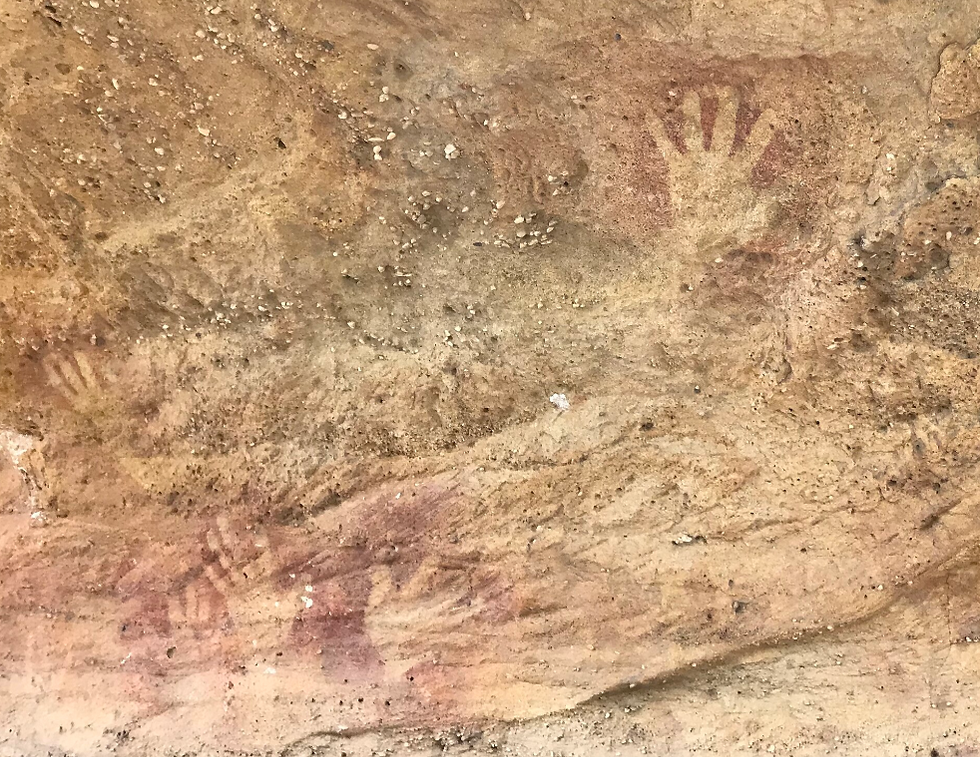
A linear conception of time presupposes record-keeping: dates, chronicles, lists. It imagines time as something that accumulates, moment by moment, and can be stored on paper. A cyclical conception presupposes something else entirely: recurrence. What matters is not when something happened once, but when it happens again. This difference has consequences. Cyclical time tends to privilege alignment with other cycles over origins or endings. A cycle is not just a series of events but a structure. The most fundamental cycle is probably the 24 hour period it takes for the earth to spin around its own axis once, a day and a night. The alternation of light and darkness imposes a rhythm on human life, and almost all other life forms on earth - we can perhaps exclude the cave-dwelling spider, or the deep sea angler fish. And within that cycle, dawn and dusk stand out as key moments, alongside midday and midnight. The Moon introduces a second, more complex rhythm. As the lunar month (synodic or sidereal) does not fit neatly into the solar year, aligning the cycles of the sun and the moon becomes a problem to be studied and solved. From this tension emerged some of the most sophisticated cycles known to antiquity: the Metonic cycle, the Callipic cycle, the 8 and 60 year cycles, and others, that approximately reconciled month with year. Also, the moon’s cycles were studied apart from the sun. When does the Moon return to the same phase at the same point in the year? When do eclipses recur in recognisable patterns? How far apart are the most northerly and southerly risings on the horizon? The same thing went for the planets, how long were their cycles in relation to the sun, to the stars, and to each other? These questions belong to a cyclical imagination. They presuppose patience, comparison, and a willingness to think in spans that exceed individual lives. Ancient astronomy, and the myths and religions that borrow the numbers derived from patterns observed in the sky, often feature very large numbers. One reason for this is practical: long cycles are necessary even to compute short cycles accurately, as divisions of a greater period. To say that a year is 365.2422 days, or that a synodic month is 29.53059 days, is already to stand at the end of a long process of observation, correction, and refinement. Perhaps another reason is an interest in discovering a single great cycle to contain all the other known ones, for an observer on earth.
Philosophically, this orientation toward cycles leads to a distinctive understanding of time itself. Time arises from motion. It is generated by the regular return of celestial patterns, and without those returns, time would have no structure by which it could be recognised or measured. Whether that structure is one imposed on the natural world by human minds, or inherent to it, is an open question. For Plato, in the Timaeus, time comes into being alongside the cosmos, as the heavenly bodies are set into ordered motion. The revolutions of the Sun, Moon, and planets do not merely take place in time; they generate time by their movement.
Within such a framework, the question is how to recognise when cycles complete and coincide. The well-known historical interest in conjunctions, returns, and long periods follows naturally. Once time is conceived in this way, the structure imposed on it (or inherent to it, depending on your view) is similar to a web of numerical relationships. The sky becomes a kind of dynamic diagram, its motions both observable and intelligible. The ancient effort to encode time in lasting forms reflects a coherent view of the cosmos as something ordered, knowable, and capable of being mirrored in human construction.
In Indian cosmology, time is structured by nested cycles, from daily rotation to lunar months, solar years, planetary revolutions, and immense cosmic periods. In Mesopotamian astronomy, eclipse cycles and planetary periods dominate the record. In China, cycles of sixty years anchor history itself. A cyclical worldview also changes how history is imagined. If time is a wheel, not an arrow, then decline and renewal are expected. Knowledge can be lost and rediscovered. Civilisations can inherit fragments of earlier understanding without knowing their origins. This helps explain why ancient writers so often speak of ages rather than beginnings, and why they are comfortable with the idea that present knowledge may be a remnant of something older.
Whatever auxiliary systems of record or notation may have existed, and they may well have taken forms that do not survive, the cycles themselves remained publicly visible and repeatable, embedded in the sky and accessible to anyone trained to observe them. To read ancient monuments as products of cyclical thinking is to take seriously the world in which they were conceived.
In many ancient traditions, the motions of the Sun, the Moon, Mercury, Venus, Mars, Jupiter and Saturn provided the primary measures by which order was perceived in the world, and according to which actions were often taken. Indeed, this pattern of seven wandering lights in the sky did not remain simply a matter of observation, but became embedded in social timekeeping, monuments and astrology. In many parts of the ancient world, from Egypt, to India and China, and the Mediterranean world, the seven-day cycle that we still have today was used, with each day associated with one of the seven classical planets, these being the sun, moon, Mercury, Venus, Mars, Jupiter, and Saturn. Only these were included, not Uranus, or Neptune for example, as you might have expected. These seven were to be found everywhere in the same order, founded in mathematics and astronomy (though in India and China, the number 9 is important also, but can be understood as 7 + 2, the extra two being the lunar nodes).
The Seven Day Week
The familiar sequence of the days of the week follows from the ordering of the seven classical planets by their apparent speeds, and a secondary numerical operation imposed upon it. Each of the seven was assigned to an hour of the day, there being 24 per day. Each 24-hour period contains three complete cycles of 7 planets (21 hours), with three additional hours remaining. The planet governing the first hour also governs the day. As a result, the planet governing each day lies three places ahead in the original sequence by speed. Repeating this process generates the familiar progression: Saturn (Saturday), Sun (Sunday), Moon (Monday), Mars (Tuesday), Mercury (Wednesday), Jupiter (Thursday), and Venus (Friday). The weekly cycle is therefore not a simple reflection of astronomical observation, but the product of a structured arithmetic procedure, combining the sevenfold planetary order with the division of the day into twenty-four hours.
What appears as a conventional sequence is in fact rooted in modular counting and the numbers 24 and 7. This familiar sequence from Saturday to Friday, was widely known across the Near East, the Mediterranean, Europe, as well as in India, Persia, and Arabia, becoming woven into religious and civil calendars as these cultures encountered and adapted one another’s astronomical lore. A notable exception is classical China, where indigenous calendrical structures were originally based on ten-day and twelve-day cycles tied to the heavenly stems and earthly branches rather than a seven-planet week, and only later adopted a seven-day planetary scheme under foreign influence from Central Asian and Buddhist contexts centuries after it was already established elsewhere. That such a week, grounded in planetary observation and modular division of time, found expression in so many regions suggests either a shared attentiveness to the celestial order, or the transmission of astronomical and astrological ideas across cultures, whether through contact, conquest, trade, or shared intellectual horizons.
Writing Time into Stone: Astrocreation

It is within this context that monumental architecture becomes intelligible. Large structures, such as megaliths, temples, and pyramids, are stable, durable, and visible across generations. They offer a way to fix celestial knowledge into the landscape itself, creating a reference system that can outlast any individual observer. If time was written in the sky, it could also be written in stone.
An alignment to the solstitial sunrise preserves that moment in the long term. An axis oriented to a stellar rising anchors a point within a longer celestial cycle. In this sense, architecture becomes a mnemonic device: a way of storing knowledge outside the human body, embedding memory into place. A single alignment gives a date, a direction, a moment of recurrence. What it does not give is structure. It cannot, by itself, express relationships between cycles, or reconcile the rhythms of Sun and Moon, or compare one period to another. For that, something more is required: counting, proportion, and geometry.
This is where measure enters the picture. Once a unit of length can stand in for a unit of time, whether a day, a month, or a year, space becomes a medium for duration. The monument may become a model: a spatial analogue of celestial order. Was this done for practical reasons? Sometimes, perhaps. Agricultural timing, ritual calendars, seasonal markers, these are real needs. But the scale, precision, and redundancy of many monuments far exceed what practicality alone would require.
To encode the cycles of the cosmos is to honour them and acknowledge their regularity, their beauty, their authority. Alignment may be a form of participation in divine order. Another reason for including time cycles in the design of a monument could be intellectual play: the pleasure of discovering near-commensurabilities, of watching number and form coincide. Another still is identity: situating human life within a vast, intelligible whole. What matters is that the act of encoding presupposes comprehension. To build time into stone is to believe that time has structure, that structure is knowable, and that it is worth preserving. It implies confidence in number, faith in recurrence.
This is where the monuments begin to speak across cultures and centuries. The numbers that emerge from careful measurement at sites such as Giza do not float free of historical thought. They correspond, often strikingly, to values preserved in ancient texts: lunar months, solar years, planetary periods, long cycles of return. Architecture and literature from different times and places can sometimes appear as parallel expressions of the same cosmological imagination. Monument builders were thinking in time, thinking in number, and thinking on a scale far larger than the individual human life. Many ancient monuments, including the pyramids of Giza, function as astro-creations. The term astro-creation was coined by my friend, French writer, Simon Ferandou, and this perfectly expresses the idea of using astronomy to express time within a human-designed structure. In the chapters that follow, we will test this idea in detail. If time was indeed written into stone, then it should be readable, not everywhere, not always, but where geometry, measure, and astronomy converge with unusual consistency. Giza offers one of the clearest places to attempt that reading, because it was so precisely constructed and so precisely measured.
Astro-geometry

The relation between astronomy and architecture at Giza is not just about reference or imitation. The structures appear to operate in both domains. The cycles of the heavens and the forms of geometry meet at the level of number, and ratio. When astronomical periods are combined, they do not only produce durations; they generate ratios, and those ratios take geometric form. The diagonal of a rectangle, the perimeter of a square, the relation between height and base are natural expressions of numerical relationships that also arise in celestial motion. In this sense, geometry is not a secondary language used to describe astronomy. It is part of the system itself. The same combinations of lunar, solar, and planetary cycles that yield numerical relations can also produce proportions that correspond to familiar geometric forms: squares, triangles, circles, and their associated constants. The appearance of values close to π, √2, √3, √5, or φ is not imposed from outside, but emerges when these cycles are brought into relation. Geometry provides the stable framework in which such relations can be fixed, compared, and reproduced.
The appearance of values close to π, √2, √3, √5, or φ is not imposed from outside, but emerges when these cycles are brought into relation. Geometry provides the stable framework in which such relations can be fixed, compared, and reproduced. It is worth noting that these correspondences were not initially sought as part of a predetermined scheme. They arise repeatedly when the cycles are examined in combination, at first appearing almost as isolated curiosities, but gradually revealing a pattern. What begins as a collection of numerical coincidences comes, on closer inspection, to suggest a consistent mode of operation, in which astronomical relations tend naturally toward geometric form.
This way of thinking is not foreign to ancient philosophy. In Plato, number and geometry are not abstract pursuits but principles of order. When he proposes that an ideal city should be structured around 5 040 citizens, he is expressing the conviction that structure matters, and that good structure is recognisable in number. Within such a framework, it becomes intelligible that architecture might serve as a medium through which numerical and geometric relations are made durable. Geometry, for Plato, is not a secondary discipline but a turning point of the mind. In the Republic, he writes that geometry “compels the soul to contemplate being,” drawing thought away from the world of appearances toward what is stable, intelligible, and real. It is for this reason that the study of geometry was regarded as a necessary preparation for philosophy itself. The later tradition even preserves the maxim associated with the Academy: “Let no one ignorant of geometry enter.” Whether or not the inscription stood physically at its entrance, it expresses a genuine principle. Geometry trains the mind to grasp relations that are not contingent, not approximate, but necessary. It is therefore not merely a tool for describing the world, but a means of aligning thought with its underlying structure. In this sense, geometry belongs intrinsically to any system that seeks to translate cosmic order into form.
What distinguishes the Giza plateau is not the presence of a single striking correspondence, but the recurrence of the same types of relations across different elements of the site. The same numerical structures appear in lengths, areas, heights, distances, and diagonals, often in ways that involve both astronomical cycles and geometric ratios. When such patterns repeat across multiple scales and forms, they begin to suggest a system. The underlying assumption is that the world is structured, that this structure can be known, and that it can be expressed through the joint language of number and geometry. At Giza, that assumption appears to have been carried further than almost anywhere else, producing a site in which astronomical cycles and geometric form are brought into a single, coherent framework.
The Question of Worldview
Probably, the reason I became so interested in the dimensions of the Giza pyramids was the worldview that seemed to me to be emerging from the desire to build time into a landscape at all. Measurements can tell us what was built and how it relates to the sky, but they cannot, by themselves, explain why such care, precision, and persistence were invested in the work. To approach that question, philosophy becomes relevant as a language capable of articulating assumptions that may otherwise remain implicit. If time is treated as something worth fixing into stone, then it is not being understood merely as a practical convenience. It is being treated as meaningful in itself: something structured, intelligible, and worthy of preservation beyond any single human life. This already implies a view of the cosmos in which order is real, not imposed; discoverable, not invented; shared between the heavens and the human world. When I hear people suggesting ancient time-keeping was about knowing when to plant and sow, it strikes me as based on a very limited understanding of culture as agriculture. There is much more at play.
Anyone familiar with myths, or religious texts will know that number occupied a privileged place in many ancient traditions. This was not simply because it was useful, but because it was often understood to reveal something about the structure of reality itself. Astronomical observation, calendrical reckoning, geometry, architecture, music, and ritual all depended upon numerical relationships. In Egypt, the practical demands of surveying land, constructing monuments, and tracking celestial cycles ensured that mathematical knowledge occupied an important place within elite culture. Later Greek writers frequently associated Egypt with ancient wisdom in geometry and astronomy, and several traditions maintained that Pythagoras himself had travelled there in search of knowledge. Egypt was widely regarded as a repository of mathematical and cosmological understanding.
Number was important to the Pythagoreans, and there was most probably a very long tradition of interest in numbers before them. Aristotle tells us:
985" 23. (1) Contemporary with and even earlier than these thinkers were the Pythagoreans, whose mathematical training led them to think the principles of mathematics were the principles of all things.
26. Numbers were the first of these, and they thought they saw in numbers many resemblances to actual things and events (justice, &c., being identified with certain modifications of number); they saw that music, too, depends on number ;
9861. hence they regarded the elements of numbers as elements of all things, and the universe as a number, They collected correspondences between numbers and things.
The significance of Aristotle's remark is that the Pythagoreans understood numerical relationships as fundamental to reality itself. The regularities observed in music, astronomy, and geometry appeared to reflect a deeper order that could be expressed mathematically. Their famous concern with harmony was therefore not confined to sound. Harmonic ratios were taken to reveal principles operating throughout the cosmos. Whether or not such views originated with the Pythagoreans, they represent one of the clearest surviving expressions of a much older tendency to see number as a bridge between the visible world and the underlying order thought to govern it.
Plato offers one of the clearest surviving expressions of such a cosmology. In the Timaeus, time is not an abstract backdrop against which events unfold. It is generated by motion, specifically, by the ordered revolutions of the celestial bodies. Time, he writes, is “a moving image of eternity,” brought into being when the cosmos begins to turn. Number, motion, and measure are not human conveniences laid over nature; they are the means by which nature becomes intelligible at all. This matters here not because Plato must be taken as a historical source for prehistoric architecture, but because his account shows what it looks like when a culture takes cycles seriously. In such a worldview, the return of the solstice, the reconciliation of lunar and solar periods, or the completion of a longer planetary rhythm are not arbitrary facts. They are expressions of a deeper harmony, one that can be known, compared, and, in some sense, participated in.
Once that attitude exists, the idea of encoding time in geometry becomes plausible, even natural. If the heavens are governed by proportion, then building according to proportion is not symbolic decoration but alignment. Architecture becomes a form of thinking made durable: a way of placing human life inside a larger order without reducing that order to words. The chapters that follow do not assume that such a worldview was universal, nor that it was consciously articulated in philosophical terms by prehistoric builders. What they suggest instead is more modest, and more demanding: that the material record may preserve traces of a way of thinking that precedes formal philosophy, and that philosophy later learned how to describe.



Comments